
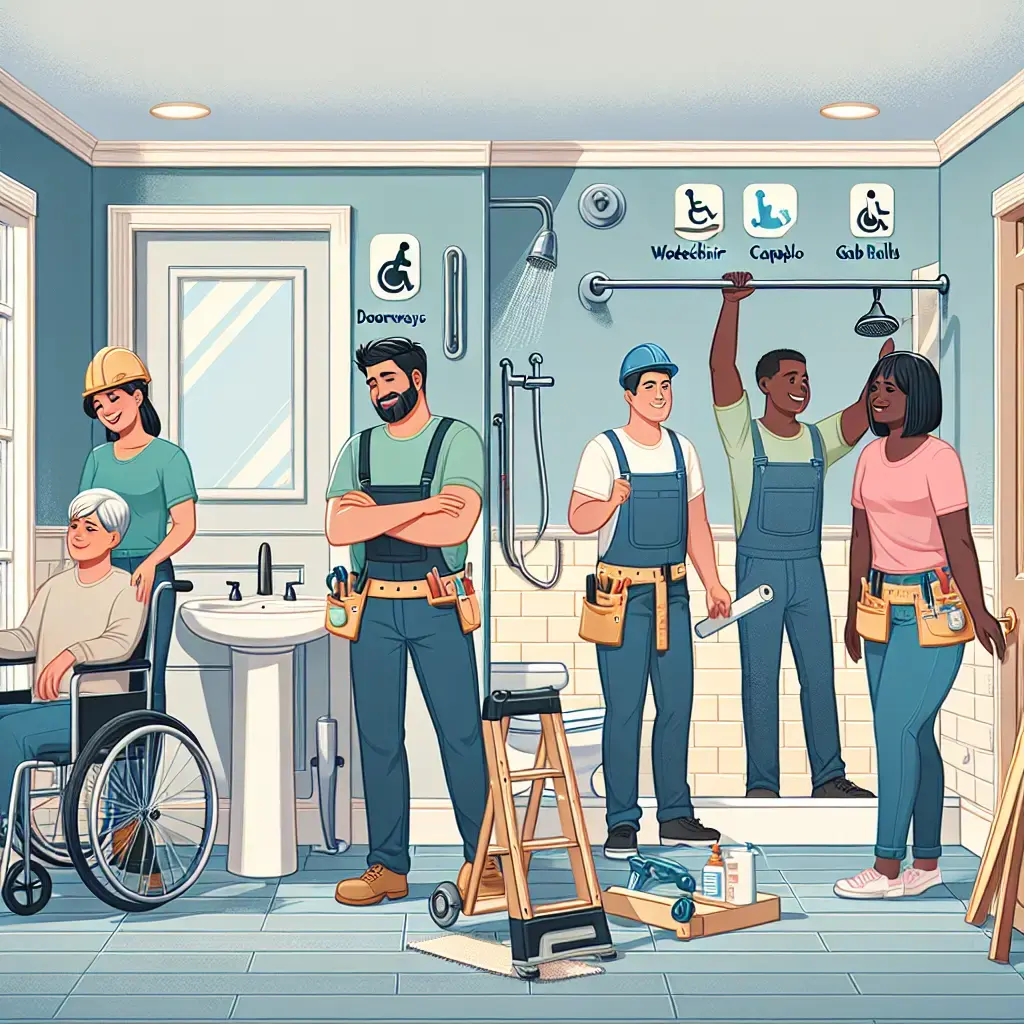
Creating a truly wheelchair accessible bathroom is not just a matter of compliance; it is a commitment to enhancing the quality of life. As our understanding of inclusive design evolves, accessible bathroom remodeling has become an essential consideration for many homeowners and designers. By integrating universal design bathroom principles, spaces can become welcoming environments that cater to the needs of all users.
This involves more than just adding grab bars; it requires thoughtful accessible bathroom design that considers every aspect, from accessible bathroom fixtures to ADA compliant bathrooms.
The importance of bathroom accessibility has never been clearer. Recent events, such as Jenna Lovell’s struggle with her landlord over basic tap replacements due to her hypermobile spectrum disorder, highlight that accessibility modifications are not mere conveniences but necessities for many. Lovell's situation underscores a widespread issue where individuals face barriers in their own homes due to inadequate facilities, as reported by ABC News.
Advocacy plays a crucial role in pushing for better ADA compliant bathrooms. However, exemptions to construction codes could perpetuate barriers for people with disabilities, highlighting a gap between policy and practice, as noted by The Guardian. Belle Owen’s experience purchasing a home in such conditions is a testament to these challenges.
Universal design principles ensure that handicap accessible bathrooms are both functional and aesthetically pleasing. These principles emphasize flexibility, simplicity, and efficiency, making spaces usable by everyone, regardless of age or ability.
Key Elements of Accessible Bathroom Design
Barrier-free bathroom designs integrate features like roll-in showers with no curb or threshold, wheelchair accessible sinks that allow easy approach and use, and accessible toilet options positioned for safe transfers.
Recent advancements demonstrate a growing trend toward inclusive design. For example, Pottery Barn's collaboration with Michael Graves Design on a new furniture collection emphasizes accessibility, offering products that support diverse abilities without sacrificing style. Explore more about these innovations at Pottery Barn.
Roll-in showers are a hallmark of a wheelchair friendly bathroom. Unlike traditional showers, these are designed without a lip or threshold, allowing easy access for wheelchair users. They often include adjustable shower heads and strategically placed grab bars to enhance safety and comfort.
When implementing roll-in showers, consider ensuring the floor has a gentle slope for effective drainage, installing non-slip tiles to prevent accidents, and using contrasting colors for better visibility of edges and fixtures. Professional installation is recommended to ensure compliance with ADA standards, and typically at least 60 inches by 30 inches of space is necessary.
Integrating Technology for Enhanced Accessibility
Integrating technology can significantly boost bathroom safety for wheelchair users. For instance, CARMEN, a robot developed by UC San Diego researchers, although primarily aimed at cognitive support, exemplifies how assistive technology can enhance daily living. Learn more about this innovation at UC San Diego.
Smart technology can be leveraged in various ways to improve accessibility: voice-activated faucets and lighting reduce the need for physical interaction; automated doors facilitate easy entry and exit; and smart toilets offer personalized settings and features like bidets.
Transforming bathrooms into accessible spaces presents both challenges and opportunities. NSW's decision not to adopt mandatory accessibility guidelines has left many residents without necessary accommodations, highlighting the need for greater awareness and enforcement of standards as reported by the Sydney Morning Herald.
Financial considerations are an important factor in remodeling, but grants and subsidies may be available for homeowners undertaking accessibility improvements. Additionally, engaging with local disability advocates can provide valuable insights and resources to ease the process.
Looking ahead, the focus on inclusive design is expected to grow. The expansion of the global power pedestal market reflects a broader trend toward integrating technology into everyday spaces, as noted by Spherical Insights. As society becomes more aware of the needs of those with disabilities, the push for universal design will likely become more prevalent.


Leave a Comment