
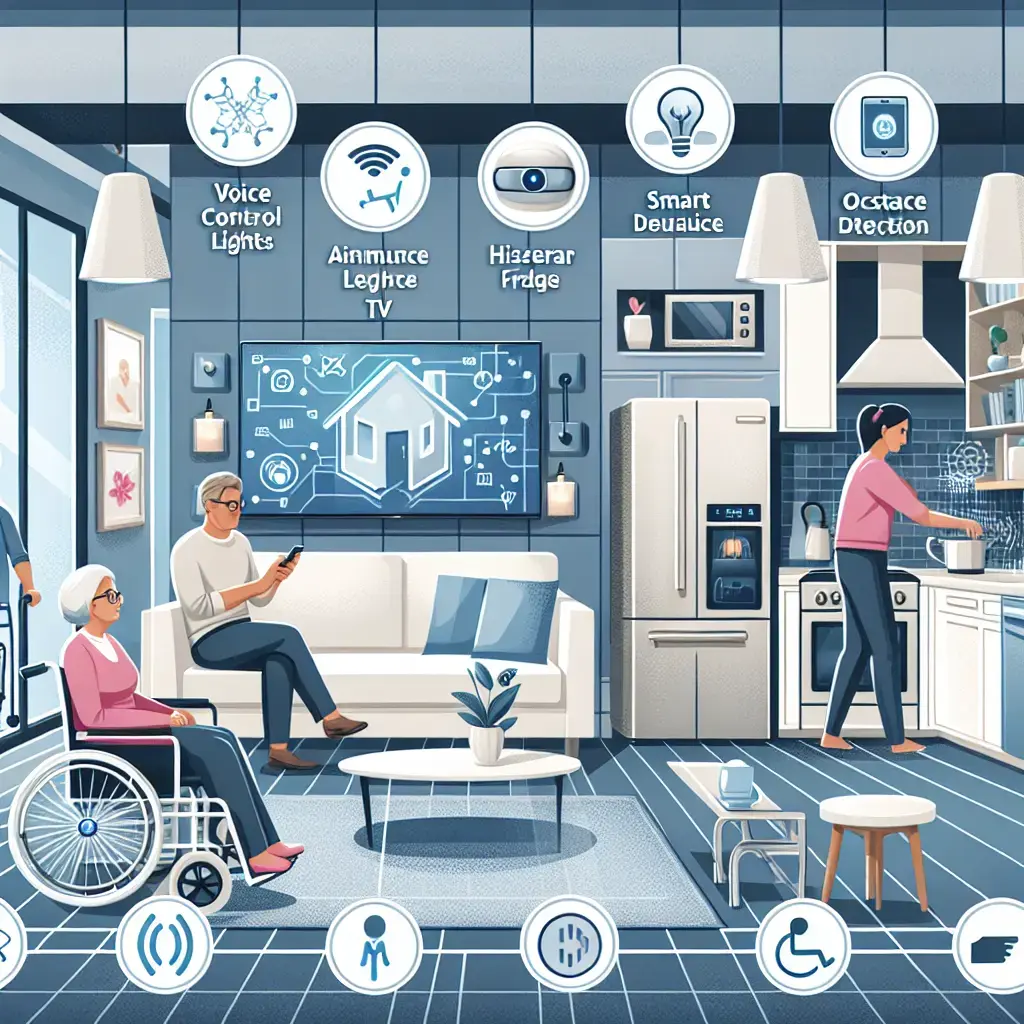
In today's rapidly advancing technological landscape, smart home technology is revolutionizing the way we live by enhancing accessibility and promoting inclusivity. As we increasingly rely on home automation for disabled individuals and smart home solutions tailored to diverse needs, the concept of smart home accessibility takes center stage. This innovative approach integrates assistive technology and adaptive designs, creating a universal design smart home environment that caters to everyone, from the elderly to individuals with disabilities.
Inclusive smart home systems offer transformative accessibility enhancements, employing accessible smart devices and voice-controlled smart home features to simplify daily tasks. For instance, smart home gadgets for accessibility can significantly enhance the independence of seniors or those with mobility challenges. These innovations are reshaping living spaces, fostering a sense of security and comfort for all residents.
The seamless integration of accessible home automation into everyday life has led to smart home upgrades for accessibility that are both practical and empowering. Smart home devices for disabilities provide tailored solutions, while voice-controlled systems offer hands-free convenience, ensuring that even the most basic functions are easily accessible. Such adaptive technology for homes underscores the importance of a smart home for the elderly and those with special needs.
Smart home technology is making significant strides in enhancing accessibility, offering innovative solutions that cater to a diverse range of needs. From assistive technology to home automation for disabled individuals, the landscape of smart home accessibility is continuously being redefined.
Imagine a world where a robot not only assists with daily chores but also enhances cognitive functions. This vision is becoming a reality with the introduction of CARMEN, a tabletop robot developed by researchers at the University of California San Diego. Designed to aid individuals with mild cognitive impairments, CARMEN provides mental exercises conducted from the comfort of one's home. This accessible smart device exemplifies how smart home technology integrates assistive solutions to support mental health and cognitive function. For more information, visit University of California San Diego.
Smart Home Technology Enhancements for Improved Accessibility
Despite technological advancements, physical accessibility remains a significant challenge. Consider Jenna Lovell, whose hypermobile spectrum disorder made turning taps impossible. Her story highlights ongoing struggles some individuals face in securing necessary accommodations within their homes. After her landlord refused to replace her taps, Jenna filed an anti-discrimination complaint in Tasmania, underscoring the importance of accessible home automation and smart home solutions that prevent such situations. Learn more at ABC News.
The intersection of legislation and smart home technology is critical for ensuring inclusivity. Unfortunately, exemptions to new construction codes could continue to exclude people with disabilities from accessible housing. Belle Owen's experience buying her first home exemplifies the difficulties faced by many with disabilities when navigating the real estate market. To bridge this gap, there is a pressing need for universal design smart homes incorporating smart home systems for accessibility from the ground up. Read more at The Guardian.
Furniture giant Pottery Barn has recently collaborated with Michael Graves Design to launch a new collection specifically designed with accessibility in mind. This initiative reflects a growing trend toward adaptive technology for homes that supports diverse abilities, blending style with functionality. Such collaborations showcase how businesses can lead the way in providing smart home upgrades for accessibility through thoughtful design. Visit Pottery Barn for details.
Julie’s aspiration for an accessible living space remains unfulfilled due to the absence of mandatory accessibility guidelines in new residential developments in NSW. This highlights a critical issue: the need for more inclusive smart home features ensuring every individual, regardless of ability, can achieve their 'utopian life.' The integration of smart home devices for disabilities should be a standard rather than an exception. Find out more at Sydney Morning Herald.
Empowering Seniors and Inclusive Smart Home Integration
The elderly population stands to benefit immensely from smart home innovations. Voice-controlled smart homes provide hands-free convenience, allowing seniors to manage household tasks easily. This is particularly transformative for those with mobility challenges, as accessible smart devices can significantly enhance their quality of life by fostering independence and security. Read more at AARP.
Exploring the potential of smart home integration emphasizes how these technologies can be seamlessly woven into daily life. Accessible home automation should not only address current needs but also anticipate future challenges, creating environments that evolve with their inhabitants. This forward-thinking approach ensures that smart home accessibility is not just a fleeting trend but a sustainable solution. Learn more at Forbes.
Innovative Case Studies in Smart Home Technology
- CARMEN Robot Companion: Offers cognitive exercises tailored to individuals' needs, promoting mental health from the comfort of home.
- Legal Battles for Accessibility: Illustrates systemic issues in housing accessibility and the role of legal advocacy.
- Adaptive Furniture Design: Pottery Barn's collaboration with Michael Graves Design demonstrates the power of design to drive inclusivity.
Conclusion: Paving the Way for Accessible Smart Homes
As we move forward into 2024 and beyond, the conversation around smart home technology must continue focusing on inclusivity and accessibility enhancements. By embracing adaptive technology for homes and prioritizing universal design principles, we can create living environments that cater to everyone. The integration of smart home features for seniors and those with disabilities is not just about convenience; it’s about dignity and independence.
Reflecting on these developments, let's envision a future where every home is equipped with smart solutions that enhance quality of life and promote dignity for all. Your insights could inspire further innovation and dialogue in this crucial field.
For more information on recent advancements and their impact on modern living, visit reputable sources like Smart Home Technology News and Inclusive Design Research Center.
Thank you for joining on this journey towards more inclusive smart homes.

Leave a Comment