
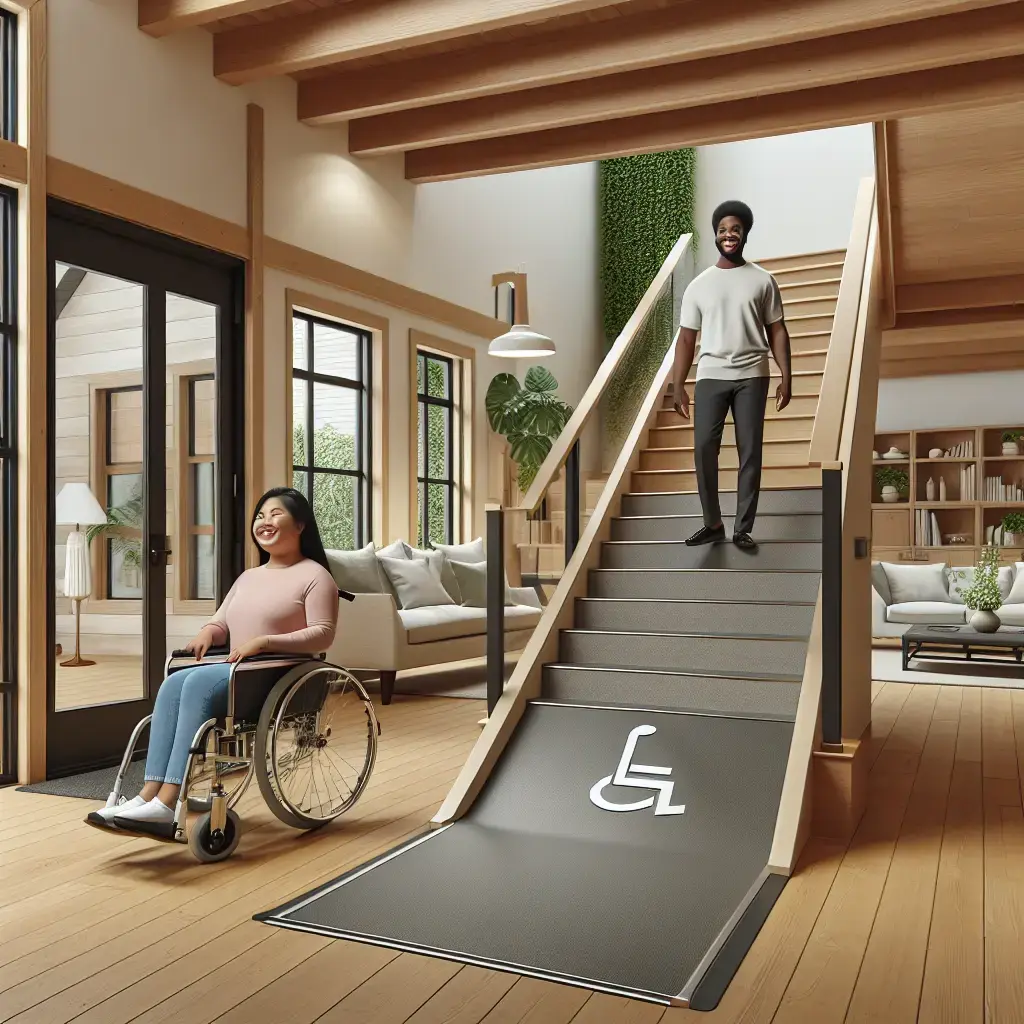
Creating environments that allow for seamless wheelchair access is more important than ever. In today's rapidly evolving world, the demand for accessible entryways reflects a deeper understanding of inclusivity and equality. This section explores various strategies and solutions that can be implemented to ensure entryways are truly accessible and inclusive, while integrating recent developments and updates for a comprehensive overview.
Accessible entryways are more than just about complying with laws like the ADA; they symbolize a society that values independence and equity. For individuals using wheelchairs, barrier-free entry is crucial for full engagement with their environment, whether at home, work, or in public spaces. Ensuring wheelchair access helps people with mobility challenges avoid unnecessary hurdles in daily life. Recent reports highlight ongoing challenges in achieving widespread accessibility. For instance, Jenna Lovell's case in Tasmania, where her landlord initially refused to make a simple $200 modification to her home (The Guardian), underscores the barriers that still exist. Such cases emphasize the need for adaptive entry solutions that cater to everyone's needs.
Wheelchair Ramp Installation: One of the most effective ways to enhance accessibility is through wheelchair ramp installation. Ramps provide a gradient that allows for smooth transitions between different levels. They are essential for both new constructions and retrofitting existing buildings. The ADA guidelines specify the slope and dimensions required for ramps to ensure safety and usability.
Door Widening for Wheelchairs: Widening doors is another critical step in creating wheelchair-friendly doors. Standard doorways often do not accommodate wheelchairs comfortably, leading to unnecessary difficulties. By widening doors, you ensure that entryways are more accessible, promoting universal access.
Integrating Technology and Design: Innovative designs and technologies are at the forefront of creating ADA-compliant entryways. Michael Graves Design, known for its adaptive products, continues to set benchmarks in inclusive design. Their recent collaboration with Pottery Barn resulted in a new furniture collection designed with accessibility in mind (Architectural Digest). This partnership illustrates how thoughtful design can support various needs, blending aesthetics with functionality. Moreover, advancements in technology offer promising solutions for enhancing entryway accessibility. Automated door systems and smart home technologies can significantly improve mobility-friendly entrances by providing hands-free options that are particularly beneficial for individuals with limited dexterity.
Overcoming Challenges and Showcasing Success Stories
Despite progress, challenges remain in making spaces universally accessible. In New South Wales, Australia, for example, there is ongoing debate about adopting mandatory accessibility guidelines for new residential developments (ABC News). Advocates argue that without these standards, many homes remain inaccessible, limiting opportunities for people with disabilities. This situation highlights the importance of legislative support and advocacy in driving change. It also points to the need for broader societal engagement to prioritize accessibility as an essential component of community planning and development.
Case Studies: Successful Adaptive Entry Solutions
The Hoxton, Chicago: This hotel exemplifies how existing structures can be transformed into inclusive spaces. Through renovations that include door widening and accessible home modifications, The Hoxton has become a model for how hospitality venues can provide seamless wheelchair entry without compromising on style or comfort (Travel + Leisure).
Public Buildings in Europe: European cities like Amsterdam have been proactive in ensuring public buildings meet accessibility standards. Many have implemented wheelchair ramp installation and automatic door systems to facilitate barrier-free entry, showcasing the effectiveness of comprehensive planning.
Looking Forward: The Future of Accessible Design
Looking ahead, the future of accessible entryways lies in innovation and collaboration. By integrating cutting-edge technology with inclusive design principles, architects and developers can create spaces that are not only compliant but also welcoming to all individuals.
As we continue this journey towards more accessible environments, it is crucial to engage stakeholders from all sectors. This includes government bodies, private companies, and community organizations working together to promote awareness and drive meaningful change.
Adapting entryways for seamless wheelchair access is not just an architectural necessity; it is a vital commitment to inclusivity and independence. Here's a recap of the critical strategies and insights discussed:
Accessible Entryways as Societal Values: Beyond legal compliance, accessible entryways reflect a society's dedication to equity and the independence of all individuals.
Effective Accessibility Strategies:
- Wheelchair Ramp Installation: Essential for smooth transitions, ramps are a key element in both new constructions and retrofits.
- Door Widening for Wheelchairs: Ensures comfort and accessibility, promoting universal access.
Innovation in Design and Technology: Integrating automated door systems and smart technologies can enhance accessibility, making entryways user-friendly for individuals with varying needs.
Challenges and Advocacy: Ongoing challenges, like those seen in Australia, highlight the need for legislative support and community engagement to prioritize accessibility.
Case Studies of Success: Examples like The Hoxton in Chicago demonstrate how existing structures can be transformed into inclusive spaces, serving as models for other venues.
Looking forward, the path to universally accessible environments lies in continuous innovation, collaboration, and advocacy. By marrying cutting-edge technology with inclusive design principles, we can create spaces that are welcoming and functional for everyone. This effort requires the active participation of architects, developers, government bodies, and communities alike.
As we navigate this journey towards inclusivity, consider how accessibility impacts your community. How can you contribute to creating more inclusive environments? Share your thoughts, experiences, or ideas in the comments below. Let's foster a dialogue that propels us towards a future where everyone can move through their world with dignity and ease.
Thank you for joining this conversation on accessibility. Together, let's champion a society that celebrates diversity and inclusivity at its core.


Leave a Comment